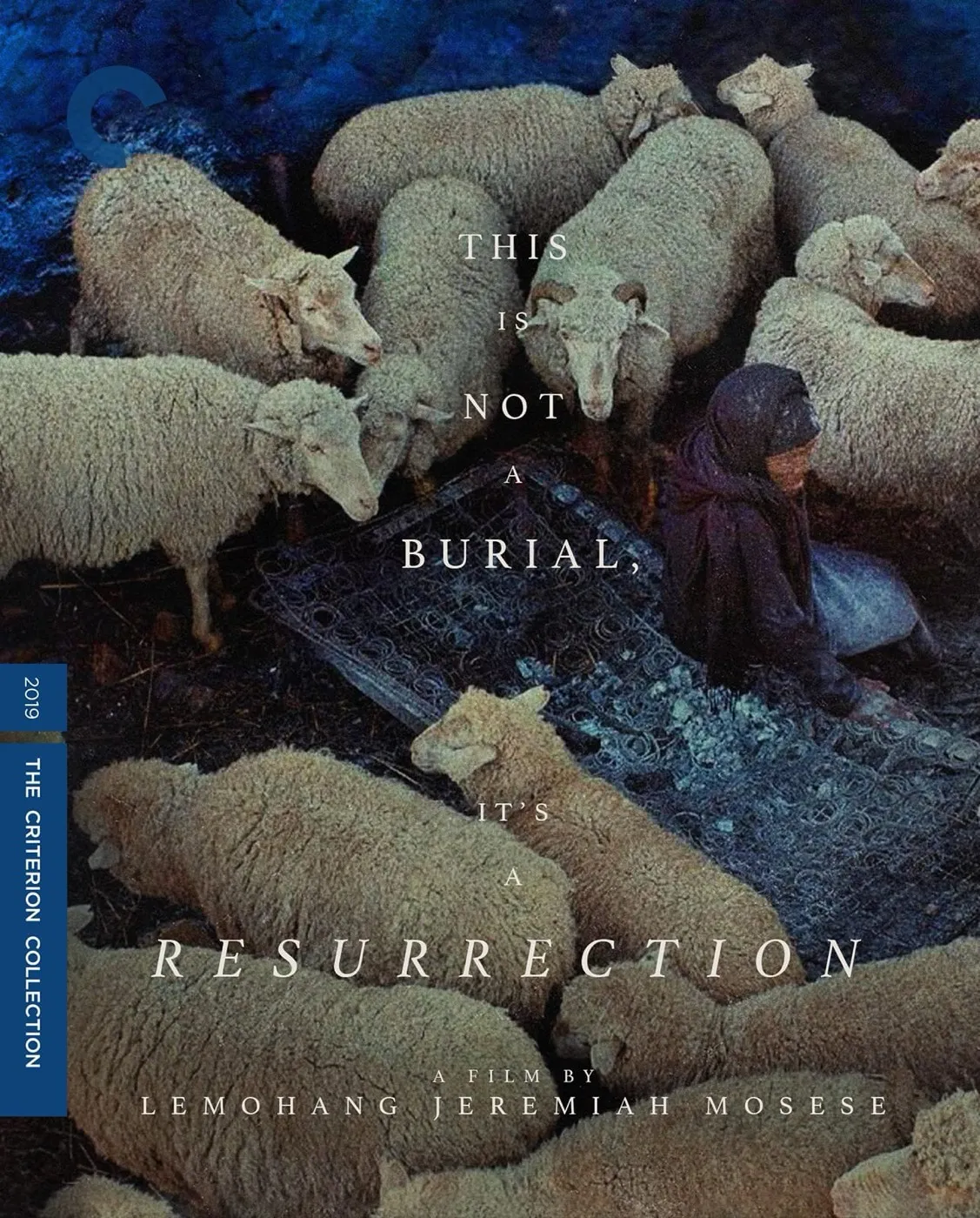
This is Not a Burial, It's a Resurrection
The From Below Microcinema will be showing *This is Not a Burial, It’s a Resurrection (2019) *on Wednesday, 4/17, at 7:00pm.
Here is the link to reserve a seat. Doors will be at 6:50 and we’re starting the movie at 7:10!
“The cemetery is the village,” argues Mantoa, played by Mary Twala Mhlongo in her final role before her own death. Director Lemohang Jeremiah Mosese’s third feature film, This is Not a Burial, It’s a Resurrection, tells the story of an elderly woman in rural Leosotho who is preparing to die. Her entire family has predeceased her, but finding her own place among their remains in the village cemetery is threatened by the state’s plans to build a massive dam construction project that would flood her homeland.
Mosese’s gorgeous cinematography and Mary Twala’s weathered expressions are certainly the mainstays of the film, but the music’s role in the storytelling can’t be overlooked. There are many scenes of Mantoa’s fellow villagers singing, but what stands out to me most is Mosese’s prominent usage of the beautiful and unique Tswana instrument, the lesiba, in the framing narrative and score of the film. A lesiba, I learned, is played by blowing over and resonating a string stretched against a long piece of wood. It is one of the only dually-classified string-wind instruments in the world.
What Mosese ultimately gives us is a colorful, slow, and aching dive into melancholia, placemaking, and the resurrectionary force of storytelling. He digs up the tensions in post-colonial statecraft and the legacy of Christianity in Leosotho. To lead a human life is to be born into a world of ancestors. We receive, for better or worse, the words, places, and bones that precede us. Mosese and his characters compel us to reflect on what obligations the living might have to the dead, and what powers the buried dead possess to ground our senses of a meaningful self.