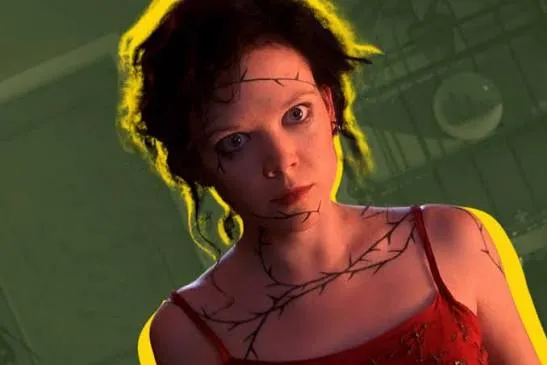
The Rage: Carrie II
Two years ago, the From Below embarked on a month of reboots, rehashes, and returns: SEQUEL AUGUST. While we haven’t devoted a whole month to it this time around, it only felt right to bring back, to sequelize, Sequel August, with a one-off screening for SEQUEL AUGUST II. And to fill that role, we’re turning to the obliquely titled The Rage: Carrie II.
Those in the know might know that Stephen King filmic adaptations have a close spot in my heart, and especially the strange world of King sequels—let me tell you about the Larry Cohen-directed A Return to Salem’s Lot sometime, which features iconic director Samuel Fuller as a semi-crazed Nazi hunter. One sequel that always loomed large on the horizon of a long-dormant project of watching (and, uhm, podcasting about) every Stephen King movie adaptation and sequel was The Rage: Carrie II. Before cracking open this 1999 film, many questions abounded: how could they make a sequel to Brian De Palma’s iconic original film? Who could replace the even more iconic Sissy Spacek? What took them so long, waiting until the dying light of the 20th century to revisit this story of a tormented teen girl’s fiery, telekinetic liberation?
Well, The Rage: Carrie II has some highly unorthodox answers to these questions, making it a perfect case in the realm of Advanced Sequel Studies. In some ways, The Rage is exactly what you’d expect from translating the Carrie story to the late-90s. Gen X Mall Goth signifiers abound, from the Marilyn Manson posters to the goofy piercings and thorned rose tattoos. The soundtrack is delightfully terrible, perhaps the least redeemable soundtrack I’ve heard in a long time, harbingering the arrival of nu metal, butt rock, and Spencer’s Gifts-style emo. It’s all a bit in poor taste to these millennial eyes and ears, but in a way that is endearing rather than abrasive. It succeeds in this account by making a Carrie for its time, rather than trying to be some simulacrum of the original, which was nearly a quarter-century in the past. In this way, too, the film becomes an early iteration of the type of sequel that has become prominent in the 21st century: the legacyquel. As defined by film writer Matt Singer, the legacyquel is “a very specific kind of sequel — in which beloved aging stars reprise classic roles and pass the torch to younger successors… These movies are all about revitalizing old franchises through the notion of legacy.” The ways that The Rage does this, mostly through Amy Irving’s return to the “franchise” as Sue Snell, are all clumsy, unrefined, and yet, oddly beguiling. It all makes a bit more sense once you realize that The Rage was initially pitched and written not as a Carrie sequel at all, until the convergence of themes and setting became too much to resist for Hollywood producers who hadn’t yet cracked a true Carrie sequel.
In reality, The Rage is a mostly unrelated story of another misfit teen girl enmeshed in the awful cruelty of high school. And let me tell you, this high school is cruel, far crueller than the one imagined in De Palma’s congealed boomer 70s. The Rage is an accurate title for this movie that lashes out against the casual, caustic, accepted misogyny of the world, and this Carrie finds a cathartic, primal scream that transcends the Y2K trappings of the film.
Back In the Habit, Charlie, Stefan, and Stark