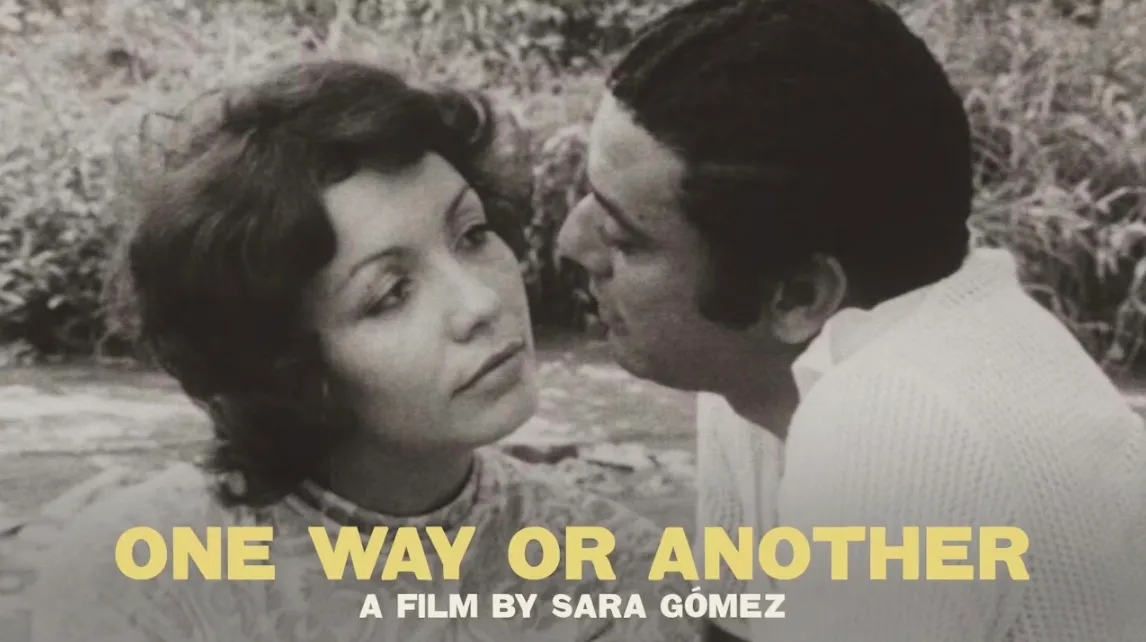
De Cierta Manera
This week the From Below will be offering our second night of revolutionary Cuban cinema by looking at the work of Sara Gómez. We will be showing her 70 minute feature De Cierta Manera (One Way or Another) (1974) and some of her short films on Thursday, August 21 at 8pm.
Here is the link to RSVP. Doors will be at 7:50 and we’re starting the film at 8:10!
One Way or Another, a treasure of communist filmmaking, is a mixed-genre romance, blending documentary, ethnography, and fiction together to explore the ambivalences of revolutionizing everyday life. It tells of the budding relationship between a schoolteacher, struggling to find success in her new post, and a factory worker, navigating his own set of competing social demands from the revolution, his upbringing, and his coworkers. Interspersed through their stories are documentarian inquiries into socialist state-led efforts to assimilate/manage/reform semi-autonomous Afro-Cuban communities into the new national project. With One Way or Another, Gomez produced a dense and loving film that, by sticking close to sincere scenes of the quotidian, quietly displays the complexity involved in the practical project of building a new society, in both its bricks and relations, in the shell of the old. She captures a slice of what the work might look and feel like to change–or resist changing–the structures of gender, love, architecture, work, religion, and race.
Sara Gomez was the avid and talented student of Tomás Gutiérrez Alea (director of last month’s From Below pick, Death of Bureaucrat) and assisted her friend, one Agnès Varda, in making *Salut les Cubains *(1963). The vast body of her brief but productive career is made up of short documentaries. One Way or Another is her only feature length film, released posthumously after her tragic asthma-related death at just 31. Trained as an anthropologist, Gomez expressed her Afro-Marxist feminism through her devotion to showing Cuba to itself in its complexity and breadth. She made films about motherhood, transportation, tobacco farms, teen education, festivals, and worker council meetings, catching everyday Cubans at work, in their ongoing optimisms and frustrations, being the protagonists of their local and national fate. I see in her work a recurring theme of revolution as pedagogy. The revolution is a story of national development, industrially and spiritually; a continual education of the soul in which all of life becomes a school teaching and creating the new, socialist subjects. Film aspired to serve a key part of that education, helping to reflect back to a society in flux its own process of transformation, becoming itself through a self-consciousness assisted in the tracing out, watching, critiquing and celebrating on celluloid in cinemas throughout the country.
Hasta la victoria siempre, Stefan, Charlie, and Stark
Sara Gómez