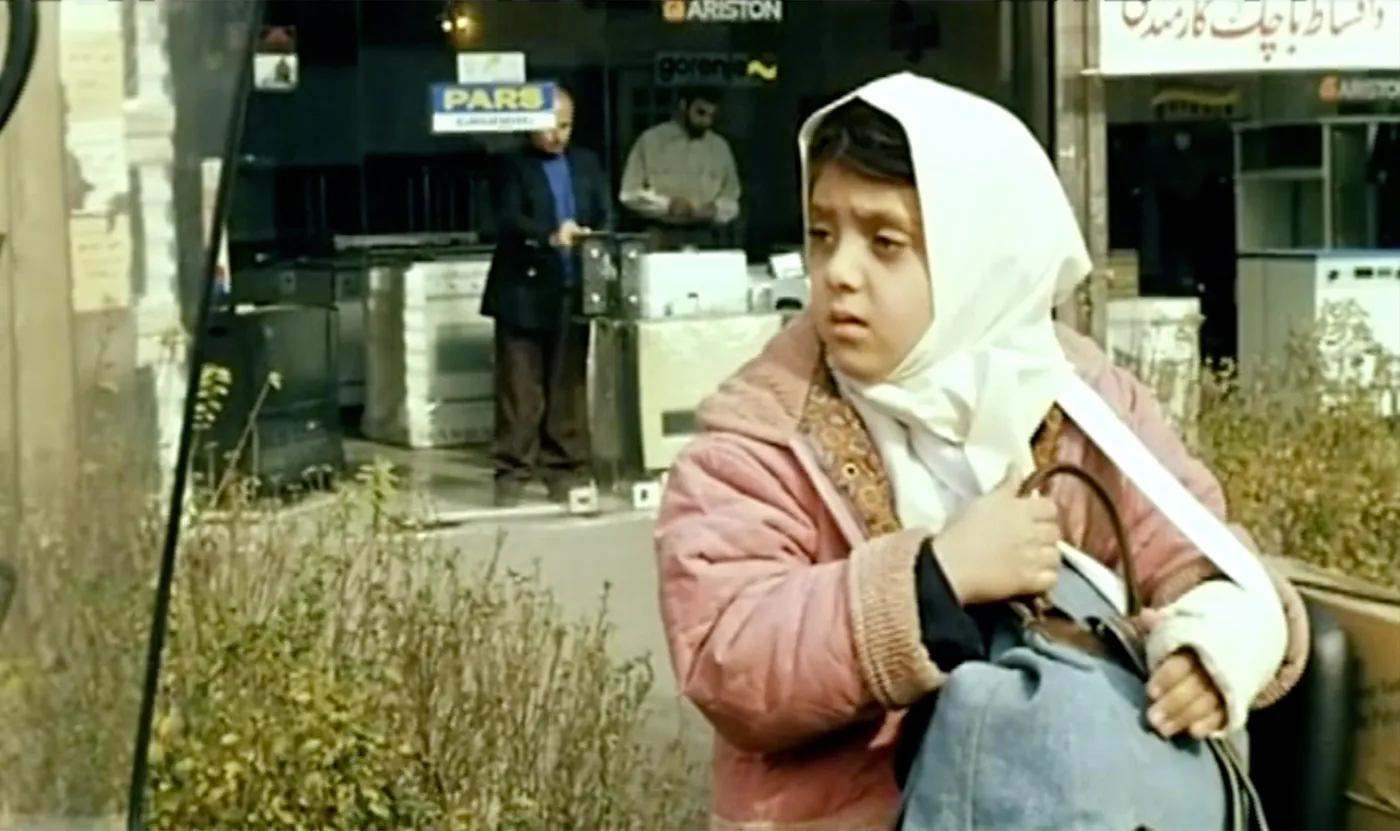
First Grade Urbanisms double feature
This coming week I (Stefan) begin my six week stint solo student teaching in a first grade classroom. To mark the occasion I’ve picked two of the greatest films of all time about first graders to program for a 120 minute double feature. We’re calling this one First Grade Urbanisms, and it’s on Thursday, April 10, at 8pm. We’ll be showing Jafar Panahi’s feature-length, The Mirror (1997), and Albert Lamorisse’s 30 minute short, The Red Balloon (1956).
Here is the link to RSVP. Doors will be at 7:50 and we’re starting the movie at 8:10!
How do these directors use the perspective and gestures of two ungovernable children to disclose the nature of a city and freedom?
Ironically both films are very pointedly about the first graders not being in school. The first film, The Mirror (1997), comes from Jafar Panahi, and is another installment alongside Abbas Kirastomi and Mohsen Makhmalbaf’s work in what is fast becoming my favorite genre: Iranian children looking for someone or something. It tells the story of Mina, a resolute first grader who must traverse Tehran by herself to get home after her mother doesn’t come to pick her up from school. I want to say as little as I can about the plot of this masterpiece to keep the delightful Panahian surprises up its sleeve. What I can say is that it is a honking, haptic portrait of bustling Tehran that captures the overlapping, intruding rhythms of everyday life from Mina’s height three feet off the ground. Panahi probes with thorny questions how to show to adult spectators a child’s experience of perceiving a city. He shoots in a near cinéma vérité naturalism: much of the dialogue is overheard and eavesdropped upon, and the cars and crowds of Tehran constantly interrupt the shots, forming textured smears of color that take up the whole visual field, playing with seesawing feelings of concealment and disclosure, freedom and confinement. We’ll also see Panahi experimenting in the divergence of sight and sound to build up a sense of the surrounding, passing whirl of an afternoon in transit. What is the child, Panahi asks us, for cinema? What does film and the city want of the child?
In the second film, first grader Pascal, played by the director’s son, ditches class one day to dialogue-lessly explore the crannies of Paris with his new found eponymous red balloon. I watched this film dozens of times as a child myself, enchanted, and hungrily poured for years through the oversized picture book published from the film’s stills. Beautiful, whimsical, and sparse, the film stages an elegant balloon-based slapstick that clowns the gray world of adults and will quickly recall to many the playful urbanisms of Jaques Tati and Charlie Chaplin. I’m most curious to see for myself as an adult what can be made anew of this movie, flexibly allegorical with an equally incredible use of sound and silence, when it is put in close conversation with the movements of Mina across Tehran. Lamorrisse’s film differs from Panahi’s in that it is an attempt at children’s literature, made explicitly for the eyes of kids. It was a smash success, distributed and screened widely in schools, and enjoyed one of the largest mass releases of a 16mm print in film history. What might that all mean for adult ideas of childhood and what, Lamorrisse may guide us to ask, does the child want of the city and cinema?
In co-evasion, Stefan, Charlie, and Stark