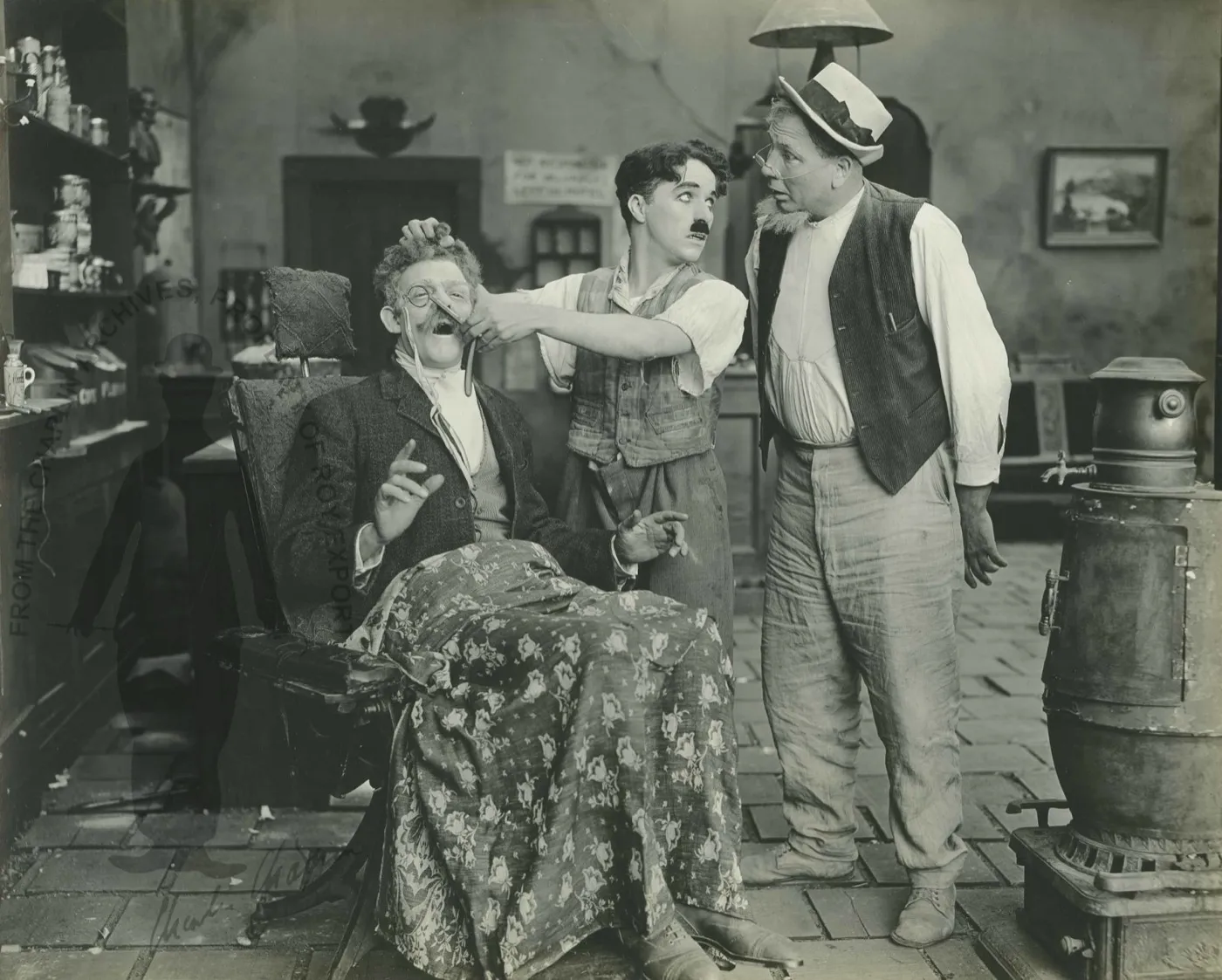
Buster vs. Charlie (1916-1924)
This week the From Below Microcinema presents a program of our two favorite little mimes, the two little masters of silent comedy: Buster vs. Charlie.
Here is the link to reserve a seat. Doors will be at 6:50 and we’re starting the movie at 7:10!
First up is Sherlock Jr. (1924), Buster Keaton’s portrait of a clumsy, daydreaming film projectionist who longs to be a detective. *Sherlock Jr. *is a tightly-told masterpiece that stands as a remarkable technical achievement for the stunt-work and innovations in early camera practical special effects that will shock the contemporary eye. Keaton, famous for doing all of his own stunts and sacrificing mightily for his art, fractured his neck while filming Sherlock Jr.’s famous water tower sequence.
In competitive comparison, we’ll also be showing several Chaplin shorts, including *One A.M. (1916), *in which we watch Chaplin simply try to go to bed after a night of drinking.
Charlie Chaplin movies are life-affirming. They bring forth the world freshly through a parade of mis-recognitions and mishaps. The mundane routines of modern life, like paying a bill at a restaurant, shaking hands, getting a massage, or giving a haircut, get upended and rendered newly strange by his foibles, and damn, are they charming foibles. We get endless enjoyment watching Chaplin inhabit his little body, delightfully out of step with his surroundings, choreographing a graceful tottering dance between failure and triumph.
If you haven’t taken the time to watch a Chaplin or a Keaton before, or hold deep doubts that you could possibly be entertained by films that are over 100 years old, now is the time to set them aside and give these a try. And if you’re well versed in their oeuvres, now is your chance to weigh in on the debate that is threatening to tear the From Below in two over who is the true master mime.
These aren’t films to be seen because “they’re important,” but because Buster and Charlie found ways in the early days of film to use the medium to distill pure, transhistorical comedy. Keaton and Chaplin make art about and against efficiency, routine, and the instrumental; they portray characters who are “bad” at whatever they undertake, chafing at the demands of a role and thereby opening up new styles of living beautifully in the actual, wiggly, unideal, faltering worlds we inhabit.